


You’ll typically qualify for a cochlear implant in the UAE if you have severe-to-profound sensorineural hearing loss and can’t understand speech clearly with properly fitted, powerful hearing aids. A multidisciplinary team confirms this through hearing tests, imaging, and medical review. For children, UAE providers cite thresholds of ≥90 dB HL in young infants and ≥70 dB HL from 24 months. Next, you’ll see the benchmarks, exclusions, timing factors, and cost details that shape your candidacy.
Key Takeaways
- Candidates typically have severe-to-profound sensorineural hearing loss with limited speech understanding despite properly fitted, powerful hearing aids, even in quiet rooms.
- Provider benchmarks cite thresholds of ≥90 dB HL for infants aged 9, 24 months and ≥70 dB HL for ages 24 months, 17 years.
- Children usually need 3, 6 months of verified hearing-aid use showing limited open-set speech recognition before referral for implant assessment.
- A multidisciplinary team reviews audiology results, CT/MRI imaging, auditory nerve function, and medical fitness for surgery and anaesthesia.
- Absent auditory nerve, unsuitable cochlear anatomy, active middle-ear infection, or unsafe surgical health may delay or rule out implantation.
Who qualifies for a cochlear implant in the uae
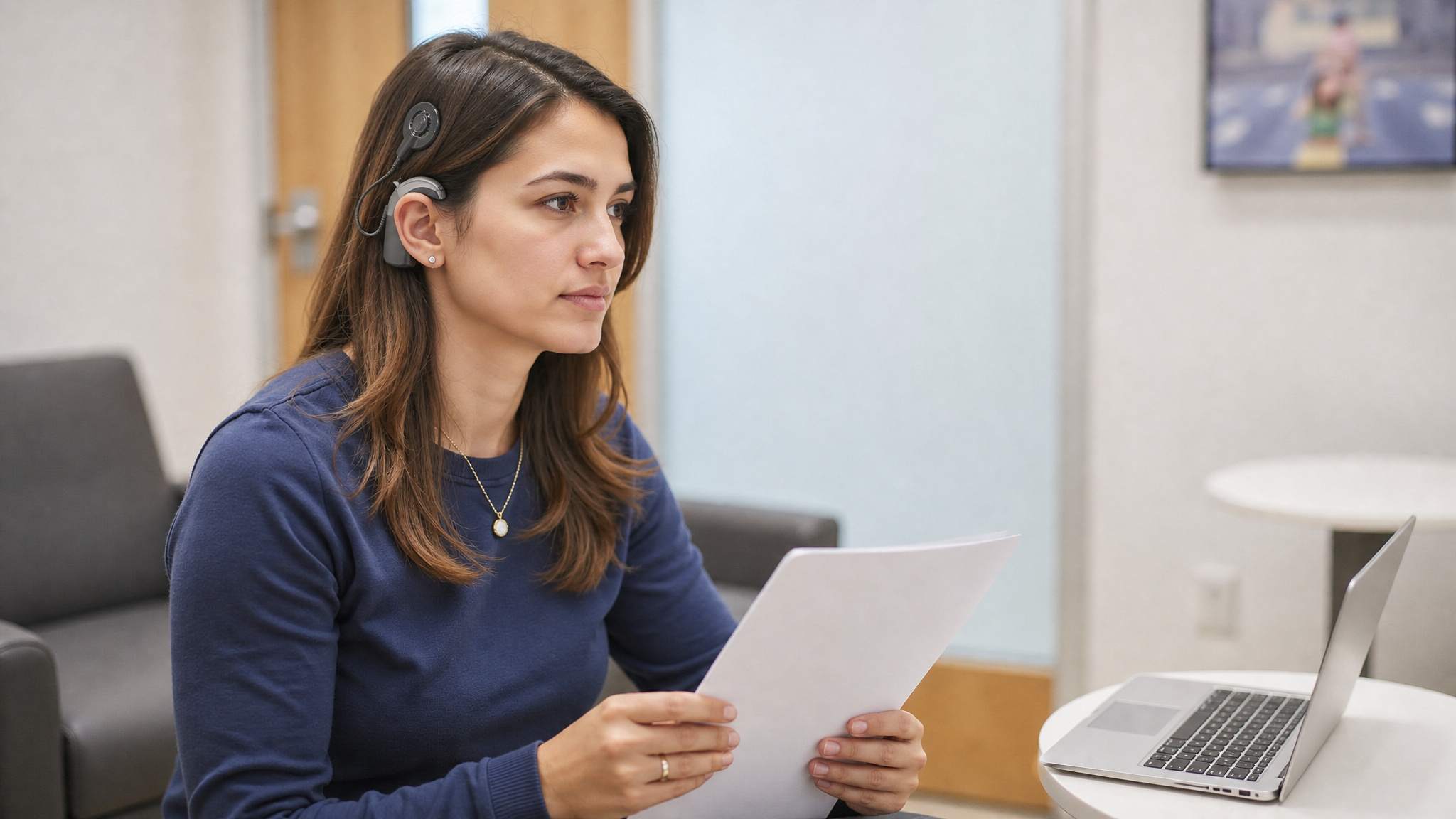
In the UAE, you may qualify for a cochlear implant if you have severe-to-profound sensorineural hearing loss and get limited benefit from properly fitted, appropriately powerful hearing aids. You might still struggle to understand speech with amplification, even in quiet rooms. If your child has congenital or progressive hearing loss, especially with delayed speech and language milestones, you should seek an evaluation. Some UAE providers also assess single-sided deafness and certain acquired hearing-loss conditions. Age alone doesn’t rule you out. A multidisciplinary team, including an ENT surgeon, audiologist and, where relevant, a speech-language pathologist, reviews your hearing tests, imaging, medical health and rehabilitation readiness. There’s no single national threshold, so you’ll need an individualized assessment with a local implant team.
What the device does and how it differs from a hearing aid
A cochlear implant bypasses damaged hair cells and sends electrical signals directly to your auditory nerve, unlike a hearing aid, which makes sound louder but still relies on your inner ear to process that sound. When severe-to-profound sensorineural loss has damaged the cochlea, extra volume from the hearing aids you’ve likely tried often doesn’t improve speech clarity.
Key differences include:
- Mechanism: Hearing aids amplify sound. Implants convert it into electrical stimulation.
- Components: You wear an external sound processor, and a surgeon places an internal receiver and electrode array.
- Requirements: Implantation needs surgery, imaging, and a functioning auditory nerve.
- Aftercare: You’ll attend programming sessions and auditory rehabilitation to learn to interpret sounds.
Results vary, so your clinical team will discuss realistic expectations.
Which hearing thresholds and speech scores qualify you

You qualify for a cochlear implant in the UAE when your combined results show significant hearing loss and limited speech understanding with amplification, not when you hit a single hearing-test number. Your audiologist measures unaided and aided hearing, then tests how well you understand speech with amplification. One Abu Dhabi provider publishes these benchmarks:
| Measure | Benchmark | Applies to |
|---|---|---|
| Hearing loss | Profound, ≥90 dB HL | Infants 9, 24 months |
| Hearing loss | Severe-to-profound, ≥70 dB HL | Ages 24 months, 17 years |
| Speech scores | Limited open-set recognition | Children using verified aids |
| Hearing-aid trial | 3, 6 months of verified use | Children before referral |
| Overall picture | Combined audiology and expected benefit | All candidates |
These figures are provider-specific, not national thresholds. If you’re an adult, you may qualify when properly fitted, powerful hearing aids still leave you struggling to understand speech, even in quiet. Your team decides using every result together.
Why hearing aids have to be tried properly first
Your team needs a proper hearing-aid trial because limited benefit from properly fitted, appropriately powerful hearing aids is a key candidacy indicator for a cochlear implant, so they need clear evidence of what amplification can and can’t do for you.
Limited benefit from properly fitted, powerful hearing aids is a key cochlear implant indicator, so your team needs clear evidence first.
A structured trial helps your team:
- Measure your aided hearing against your unaided results
- Test how well you understand speech with amplification, including in quiet settings
- Confirm that poor results don’t stem from an underpowered or poorly fitted device
- Track your child’s speech and language progress during verified hearing-aid use
One Abu Dhabi provider cites 3 to 6 months of verified use for children, though this isn’t UAE-wide. If you’re still struggling despite good amplification, you’ve built a stronger case for assessment.
Why timing matters so much in children

Timing matters because speech and language skills develop rapidly in early childhood, so earlier assessment for a child with suspected significant hearing loss can support timely intervention and stronger language development. If your child’s hearing loss is congenital or progressive, don’t wait for delayed milestones to prompt action. Seek specialist evaluation as soon as you suspect a problem.
Some UAE centres assess children for implantation from around nine months of age, and other published provider guidance cites 12 months. There’s no single minimum age across services. Your child’s clinical team decides timing individually, weighing audiological findings, imaging, medical fitness and speech-language development rather than age alone.
Earlier assessment doesn’t guarantee a specific outcome. It does give your child’s team more time to confirm candidacy, plan surgery and begin auditory rehabilitation.
Which medical and imaging findings can rule you out
The findings that can delay or rule out cochlear implantation are an absent or non-functioning auditory nerve, unsuitable cochlear anatomy, active middle-ear infection, and medical conditions that make surgery unsafe:
- An absent or non-functioning auditory nerve, which can’t carry signals to your brain
- Cochlear anatomy that won’t safely accommodate the electrode
- Active middle-ear infection, which usually needs treatment before surgery
- Medical conditions that make surgery or anaesthesia unsafe
An ENT or implant surgeon identifies these by reviewing your medical history, ear health and general fitness for anaesthesia, and CT and/or MRI imaging shows your inner-ear anatomy and auditory nerve.
Not every finding is permanent. Your team may recommend further psychological, developmental, vision or therapy assessments based on your needs. Because criteria vary between UAE programmes, ask your local implant team to explain how your results affect your candidacy and what options remain if implantation isn’t suitable.
How the assessment works and what a cochlear implant costs here
A multidisciplinary team of ENT surgeons, audiologists and, where relevant, speech-language pathologists at a UAE implant centre assesses your candidacy after a referral, and published UAE guidance doesn’t set a single standard price for a cochlear implant. Your audiologist measures your unaided and aided hearing and tests how well you understand speech with hearing aids. Your surgeon reviews your medical history and ear health, and orders CT or MRI scans to check your inner ear and auditory nerve. Your team may also recommend developmental, psychological or vision assessments, and will discuss realistic expectations and long-term rehabilitation commitments before surgery.
A 2025 UAE study found clinicians weigh financial considerations alongside hearing-loss severity, age and comorbidities, so confirm costs and coverage directly with your local implant team.
Find the Right Cochlear Implant Specialist in the UAE
Qualifying for a cochlear implant takes expert evaluation and the guidance of specialists who understand your hearing needs. Through Doctors Finder, we help you connect with verified UAE ENT and hearing specialists by specialty, location, and hospital across every emirate. DoctorsFinder can help you find the right place to start. Contact us today and take the next step in your hearing journey.
Frequently Asked Questions
Can People With Single-Sided Deafness Qualify for a Cochlear Implant in the UAE?
Possibly. Some UAE providers list single-sided deafness among the conditions they’ll assess for cochlear implantation, but it isn’t a universal UAE-wide criterion. Your ENT surgeon and audiologist will measure your hearing, test your speech understanding, and review CT or MRI scans of your inner ear and auditory nerve. They’ll also discuss rehabilitation commitments and realistic expectations. Confirm candidacy with your local implant team, since criteria and outcomes vary between programmes.
Is There an Upper Age Limit for Adults Seeking a Cochlear Implant?
No, there’s no fixed upper age limit. You can qualify as an adult when your hearing loss and limited hearing-aid benefit meet clinical criteria, and age alone won’t rule you out. Your implant team will assess your hearing, speech recognition, imaging, and fitness for surgery and anaesthesia. They’ll also consider your ability to attend programming and rehabilitation. Since criteria vary by programme, confirm your evaluation with a local UAE implant team.
How Long Does Rehabilitation and Device Programming Continue After Cochlear Implant Surgery?
There’s no single fixed timeline; your implant team treats programming and auditory rehabilitation as a long-term commitment rather than a short course. You’ll attend follow-up sessions where clinicians adjust your device settings, and you’ll take part in rehabilitation to build listening and communication skills. Your schedule depends on your clinical needs, and your child may also need speech-language support. Before surgery, your team should explain expected attendance and realistic outcomes.
Will a Cochlear Implant Guarantee I Can Understand Speech Normally Again?
No, a cochlear implant can’t guarantee you’ll understand speech normally again. Your outcome depends on individual factors your clinical team assesses, including your audiological findings, auditory nerve function and cochlear anatomy. You’ll also need ongoing device programming and auditory rehabilitation, so your willingness to attend regularly matters. Before surgery, your team will openly discuss realistic expectations with you and estimate your likely benefit based on your specific assessment results and needs.
Which Emirates Have Cochlear Implant Teams That Can Evaluate My Candidacy?
Published cochlear implant services operate in Dubai and Abu Dhab. Contact a local implant team to confirm they offer a full candidacy evaluation. You can expect a multidisciplinary assessment involving ENT surgeons, audiologists and, where relevant, speech-language pathologists. Since criteria vary by programme, ask each team how they’ll assess your hearing, imaging and rehabilitation needs.