






Foamy urine is usually harmless. A forceful stream traps air, and those bubbles vanish within moments. Dehydration, fever, stress, or intense exercise can cause brief changes. But if you notice thick, frothy foam that lingers or keeps coming back, it may signal proteinuria, protein leaking through your kidneys’ filters. You can’t confirm or rule that out by looking, though. Only a urine test can. Here’s how to tell the difference and when it’s worth checking.
Key Takeaways
- Foamy urine is usually harmless, often caused by a forceful stream, dehydration, fever, stress, or intense exercise.
- Ordinary bubbles disappear within moments, while concerning foam is thick, persistent, keeps recurring, and may remain after flushing.
- Persistent foam can signal proteinuria, where damaged kidney filters leak protein that stabilizes bubbles in urine.
- Diabetes, high blood pressure, kidney disease, lupus, heart failure, and preeclampsia during pregnancy can cause protein leakage into urine.
- See a doctor if foam lasts several days, recurs regularly, or appears with swelling or dark, cloudy, or bloody urine.
What does foamy urine mean and should you be worried

Foamy urine is usually harmless, but persistent foam can signal protein in your urine and is worth checking with your clinician. A forceful stream hitting toilet water can create temporary bubbles, and a single layer of larger bubbles that quickly disappears is usually normal. Dehydration, fever, stress, or intense exercise can also cause short-lived changes.
Persistent, frothy foam is different. It can signal proteinuria, meaning your kidney filters are leaking protein. Foam is a clue, not a diagnosis. You can’t confirm or rule out protein by appearance alone. Only urine testing can.
Contact your clinician if the foam appears regularly, lasts more than a few days, or remains after flushing. Seek assessment if you notice swelling in your hands or feet, fatigue, nausea, or dark, cloudy, or bloody urine.
What separates real foam from the ordinary bubbles everyone gets
Foam that may reflect protein in your urine is persistent and keeps coming back, while ordinary bubbles disappear within moments. Ordinary bubbles usually come down to mechanics, not medicine. When your stream hits the toilet water forcefully, it traps air and creates a single layer of larger bubbles that quickly vanishes. This kind of foam is normal and isn’t a sign of kidney trouble.
Foam linked to protein looks different. It’s frothy, often thick, and it can remain even after you flush. You’ll also see it repeatedly rather than once.
Still, appearance can’t confirm or rule out protein. Only testing can tell you what’s there. If you notice foam regularly, for more than a few days, or alongside swelling in your hands or feet, ask your clinician for a simple urinalysis or urine albumin-to-creatinine ratio test.
Why protein leaking into the urine makes it foam
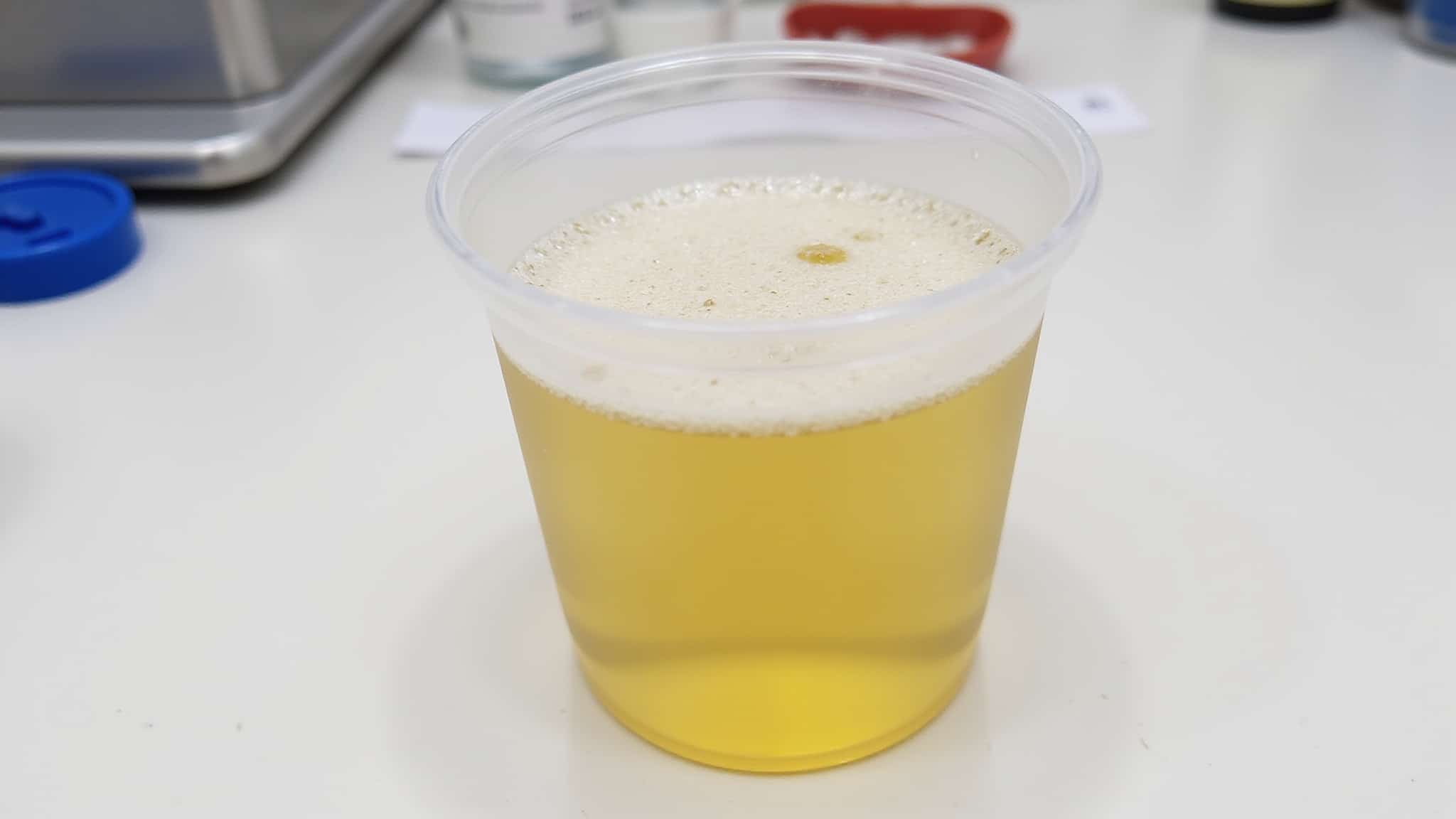
Protein makes urine foam because it lowers surface tension and stabilizes air bubbles, much like egg whites whipped into froth. That’s why protein-related foam tends to persist rather than vanishing in seconds. Healthy kidneys keep protein in your blood, so lingering foam can signal that something is happening inside your kidneys.
Your kidneys contain tiny filters called glomeruli. They let water and waste pass into your urine while holding back larger molecules, especially albumin. When diabetes, high blood pressure, inflammation, or autoimmune conditions such as lupus damage these filters, protein can slip through. Clinicians call this proteinuria.
Still, you can’t confirm protein by looking alone. Only a simple urine test can reliably tell you whether protein is actually present.
Which conditions cause proteinuria
Proteinuria can be caused by temporary triggers such as fever, stress, intense exercise, or dehydration, as well as by diabetes, high blood pressure, kidney disease, and systemic conditions like lupus or heart failure. Temporary causes are often harmless, but persistent proteinuria points to an underlying condition worth investigating.
| Cause | Example | What it means |
|---|---|---|
| Temporary | Fever, stress, intense exercise, dehydration | Usually resolves; repeat testing confirms |
| Metabolic and vascular | Diabetes, high blood pressure | Leading causes of kidney damage |
| Kidney disease | Chronic kidney disease, nephrotic syndrome, inflammation | Nephrotic syndrome also causes swelling |
| Systemic | Lupus, heart failure, infection, blood disorders | Requires targeted evaluation |
If you’re pregnant, proteinuria may signal preeclampsia, so tell your midwife or clinician promptly. A single positive result doesn’t mean you have kidney disease. Your clinician will repeat testing to see whether the protein truly persists before ordering imaging or other investigations.
Why foamy urine in pregnancy is handled differently
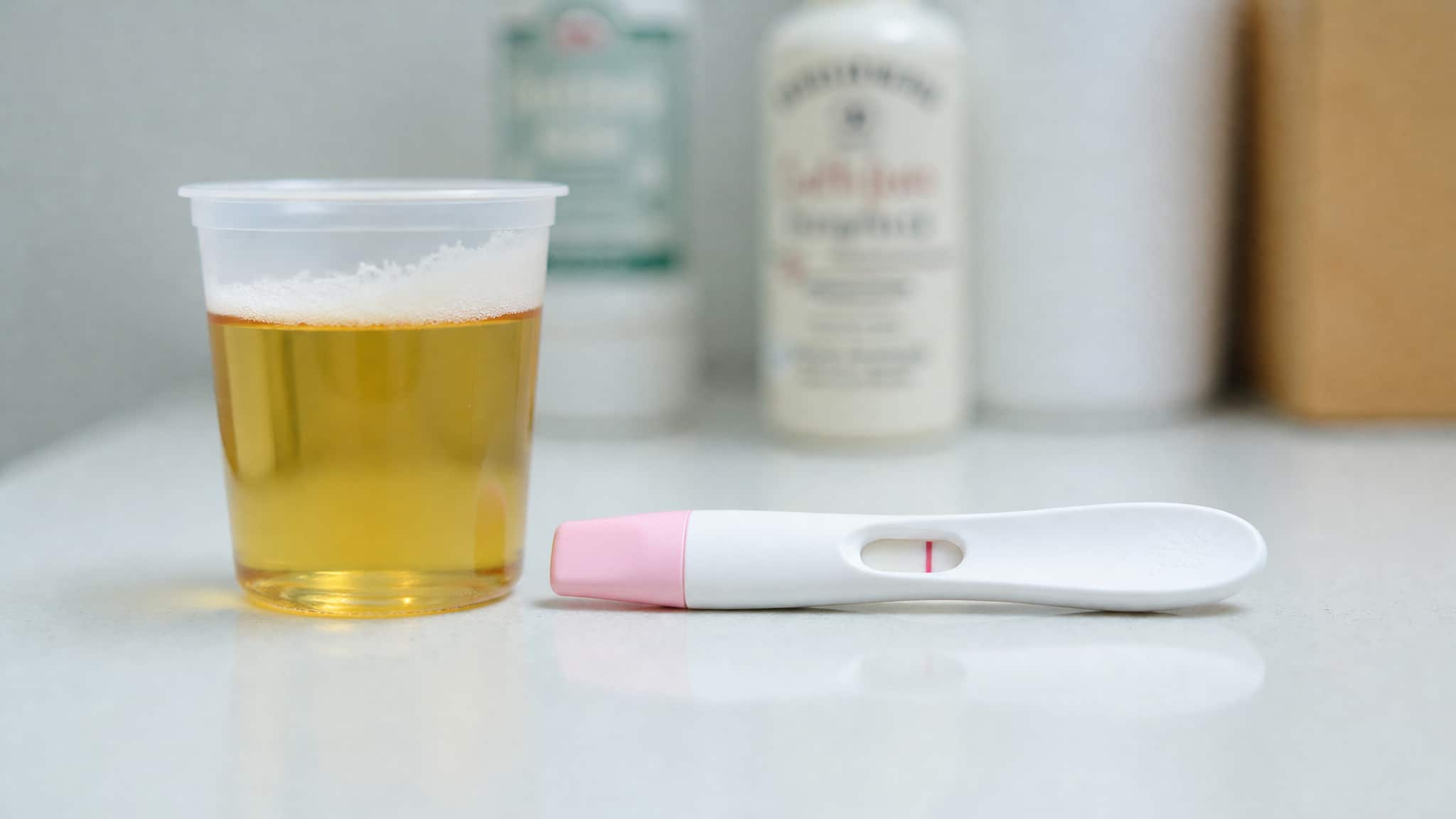
Foamy urine in pregnancy is handled differently because protein in your urine can be an early sign of preeclampsia, a pregnancy-related condition that needs medical assessment. That’s why you shouldn’t wait to see whether foamy urine settles on its own, as you might at other times.
Foam can still have harmless causes, such as a forceful stream or mild dehydration. But you can’t tell from appearance alone whether protein is present. Only a urine test can confirm it, and your clinician may repeat testing to see whether protein persists.
Mention foamy urine at your next prenatal visit, or call sooner if it’s persistent, thick, or worsening. Seek prompt care if you also notice swelling in your hands or feet. Early testing lets your care team identify problems and act quickly.
Which other symptoms alongside it raise the concern
Swelling, lingering fatigue or nausea, and changes in urine color raise the concern when they appear alongside foamy urine. Foam on its own often has a harmless explanation, but these companions shift the picture. Watch for:
- Puffy hands, ankles, or feet, where your socks leave deep marks or your rings feel noticeably tight
- Fatigue, nausea, vomiting, or a fading appetite that lingers alongside the bubbles
- Urine that looks dark, cloudy, or tinged with blood, not just frothy
These signs don’t confirm kidney disease, but they’re good reasons to book a clinical check. Your clinician can run a urinalysis, a urine albumin-to-creatinine ratio, and an eGFR blood test to clarify what’s happening. Catching persistent protein early gives you options to protect your kidneys.
How it is tested and when to see a doctor
A urine test is the reliable way to find out what’s behind the foam, because appearance alone can’t confirm or rule out protein. Your clinician will start with a urinalysis, which detects protein and other abnormalities, and a urine albumin-to-creatinine ratio (uACR), which measures albumin. A blood test for estimated glomerular filtration rate (eGFR) shows how well your kidneys filter. Since proteinuria can be temporary, you may need repeat testing to confirm it’s persistent. Depending on results, further steps can include a protein-to-creatinine ratio, imaging, or a kidney biopsy.
Book an appointment if foam appears regularly, lasts more than a few days, or becomes more pronounced. If you have diabetes, high blood pressure, or a family history of kidney disease, ask about testing sooner.
Conclusion
Occasional foam in the toilet bowl is usually harmless and simply reflects how fast urine hits the water or how concentrated it is. Persistent foam is different, because it can signal protein leaking from the kidneys and deserves a simple urine test. The reassuring part is that a quick check can tell you whether it is nothing or something worth following up. If the foam keeps coming back, Doctors Finder can help you reach a UAE kidney specialist who can test for protein and explain what the result means for you.
Check Persistent Foamy Urine With a Kidney Specialist
If foamy urine keeps returning, a simple protein test can settle the question. Doctors Finder can connect you with nephrologists across the UAE who diagnose and manage kidney-related protein loss. If diabetes or blood-sugar control may be part of the picture, you can also browse endocrinologists. Use Find a Doctor to search by specialty and location, or start from the Doctors Finder homepage.
Frequently Asked Questions
Can Drinking More Water Make Foamy Urine Go Away on Its Own?
Sometimes it can. If dehydration’s concentrating your urine, drinking more water may reduce the foam, and bubbles from a forceful stream usually vanish quickly anyway. But water won’t stop protein from leaking through your kidneys. If you notice foam regularly, for more than a few days, or alongside swelling, fatigue, or dark urine, ask your clinician for a urinalysis or uACR test. Testing, not appearance, reliably confirms what’s actually happening.
Do High-Protein Diets or Protein Supplements Cause Foamy Urine?
High-protein diets and supplements aren’t an established cause of foamy urine, and you can’t judge protein levels from bubbles. Persistent foam may reflect proteinuria, meaning protein leaking through your kidney filters, which differs from protein you eat. Dehydration, fever, stress, or intense exercise can cause temporary changes. If foam persists for more than a few days, ask your clinician about a urinalysis or urine albumin-to-creatinine ratio test to confirm it.
Can Toilet Cleaners or Chemicals in the Bowl Create Foam?
Yes, they can. Many toilet cleaners contain surfactants that leave residue in the bowl, and your urine stream can whip that residue into bubbles. A forceful stream alone can also create temporary foam. To check, urinate into a clean container. If bubbles quickly vanish, they’re most likely harmless. If thick foam persists or keeps appearing, ask your clinician for a urinalysis, since only testing can reliably confirm or exclude protein.
Is Foamy Urine More Common in Men or in Women?
There’s no clear evidence that foamy urine is more common in men or women overall. Some causes are sex-specific, though: if you’re male, retrograde ejaculation can produce foam, and if you’re pregnant, preeclampsia can cause proteinuria that needs prompt assessment. Most other causes, like dehydration, diabetes, or high blood pressure, affect everyone. If your foam persists for days or keeps returning, ask your clinician for a simple urine protein test.
Can Children Have Foamy Urine, and Is It Concerning?
Yes, your child can have foamy urine, and it’s often harmless. A forceful stream, dehydration, fever, stress, or intense exercise can cause temporary bubbles or brief proteinuria. You can’t judge protein by appearance alone, though. If the foam persists for more than a few days, stays after flushing, or comes with swelling, fatigue, nausea, or dark, cloudy, or bloody urine, ask your child’s clinician about simple urinalysis and kidney testing.